
The one on justifications
A free-for-all

Friends,
I hope that all is well with you and yours, and that this e-mail finds you on a boat with shoddy connection, in the tropics, three months after I sent it.
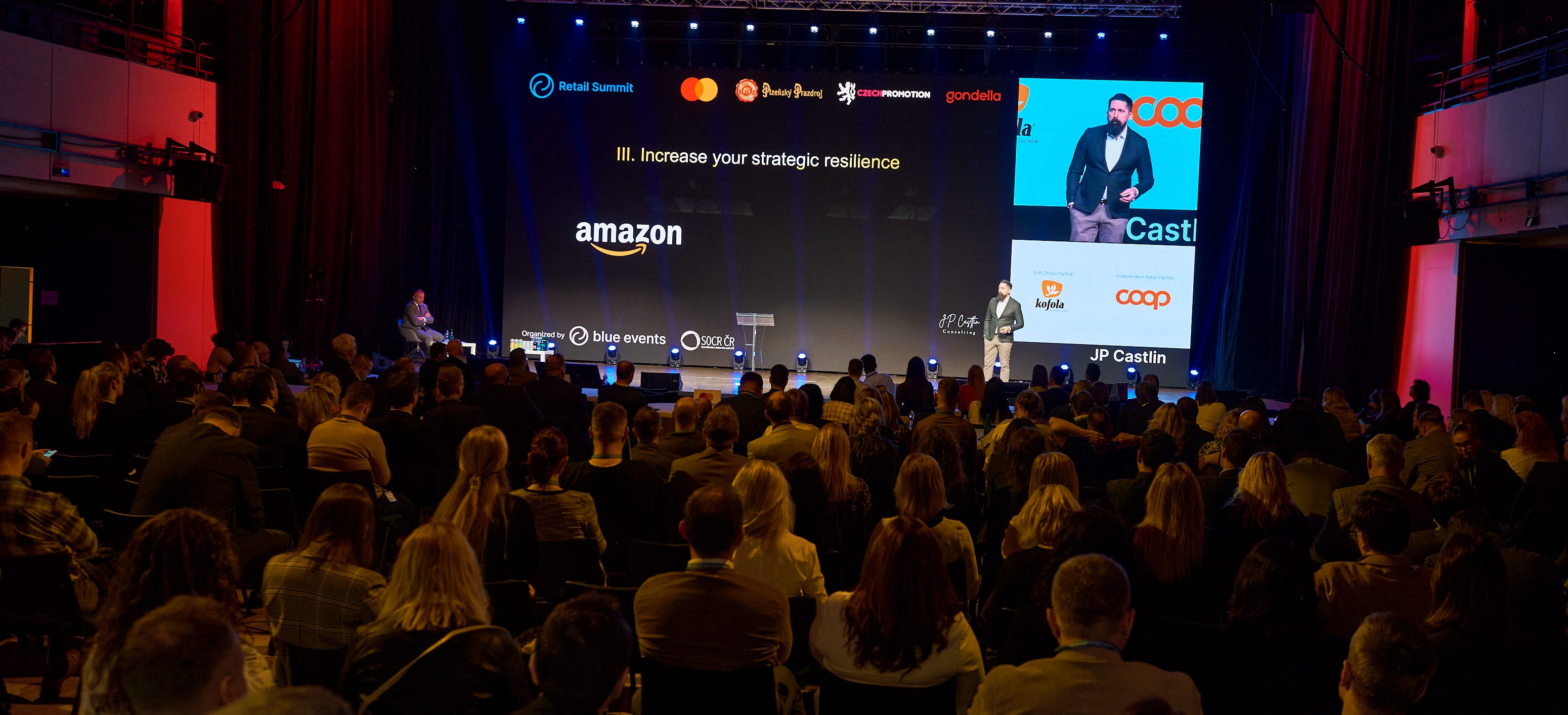
Now accepting speeches and assignments for 2026
THE 2026 KEYNOTE DECKS
When the ground moves. How to survive and thrive in a world of dynamic uncertainty. (Based on a new book by the same name.)
What to do when you don’t know what to do. How to create a competitive advantage from change. (Based on the new book by the same name.)
From last to first. How to create peak performance in the world’s most competitive settings. (On adaptive strategy in Formula 1.)
The volcano that birthed Frankenstein. How contexts enable innovation — and how to take make the most of it. (A narrative-based talk on global interconnectedness and enabling constraints.)
THE 2026 SERVICE OFFERING
Strategic guidance. Formulation, audits, the ABCDE framework, fractional CSO, knowledge workshops.
Uncertainty management. Dynamic uncertainty, executive decision-making, knowledge workshops.
Marketing guidance. Strategy, fractional CMO, knowledge workshops.
Teaching. Onsite lectures, offsites, knowledge workshops.
For any and all project inquiries, including presentations, merely send me an email by clicking this text.
The TL;DR
None needed. Moving swiftly on.
Personal updates before we go-go
Spent a few days up north with the family to get away from it all. Conditions were bonkers: a couple degrees below freezing (Celsius), as-near-as-makes-no-difference no people, and grandparents to take care of the kids. Spent two days doing double diamonds and steep forest runs. Lovely.
Obviously, as if one would be lured into thinking otherwise, it was then followed by a predictable regression toward the mean. Once we got back home, we had to take the eldest for a four-year checkup. She had never been carsick in her life. This time around, though, just as we had found a parking spot in central Stockholm, she threw up three times in quick succession all over her clothes and seat. Not lovely.
Then, just today, I had a massive hardware failure on my laptop. That one is worse and may have a short-term impact on this newsletter. Let us hope not.
Great to see the new F1 liveries. So far not a dud among them, but then again, Alpine has yet to present theirs.
To say that I am looking forward to the next season would be to put it very mildly indeed. It will be fascinating to see the implications of the new rule changes and what they do to the overall field.
Re: the Greenland situation, just… …sigh. The most powerful country on the planet really is run by an enabled fucking toddler.
Moving on to markets.
The market vitals
As one might expect, there has been a lot of talk about the market implications of Trump’s various “policies” (using the term very loosely). However, little has been said on their impact on financing strategies. This week, a report by WSJ’s CFO Journal revealed that more and more companies are electing to refinance their debt instead of waiting for the possibility of further declines. This indicates two things:
First, although the refinancing wave is consistent with firms prioritizing execution certainty over waiting for marginally better rates (opting for the Devil they know over the one they do not), it appears to be intensified by the elevated dynamic uncertainty around fiscal policy, the Fed’s independence, geopolitical strife, and tariffs.
Second, for strategists, the key effect may be less about higher interest expense and more about a shift toward risk containment: extending maturities, preserving liquidity, and favoring projects with faster payback. From this follows higher hurdle rates, fewer long-cycle undertakings, margin prioritization and, therefore, potential short-termism.
It is interesting to see how some analysts view the potential of an AI bubble. To illustrate, Barron’s Tae Kim, who I otherwise like, recently wrote that the fundamentals “sound as strong as ever”. To support his argument, he quoted Nvidia CEO Jensen Huang who said that “the world is just a few hundred billion dollars into what will eventually be trillions of dollars spent on AI” and pushed back against the bubble narrative by citing rising rental prices for Nvidia GPUs. He also referenced Amazon CEO Andy Jassy, Microsoft CEO Satya Nadella, and OpenAI CFO Sarah Friar who all saw strong growth on the horizon.
Of course, one might also note that all of these fine ladies and gentlemen have a rather substantial reason for saying that their product and services will see increasing demand, particularly amid market fears that they will not. Executive optimism is not evidence by itself; it is marketing plus incentives. The question is whether independent indicators such as unit economics, utilization rates, payback periods for AI CapEx, and the persistence of pricing power actually confirm the story. That still remains to be seen. And while rising rental prices can be a sign of true scarcity and increasing demand, it can also be a sign of temporary bottlenecks and speculative hoarding.
According to Benedict Evans, Meta this week cut about 10 people, or 10% of the total, from its VR hardware and Horizon Worlds VR social network. The firm also closed three VR content studios, and will no longer produce new content for its VR fitness experience Supernatural.
Even Mark Zuckerberg, in other words, seems to have realized that VR’s growth story is more fantasy than reality, much as I pointed out years ago. My reasoning was simply that there are too many issues associated with the hardware, ranging from motion sickness/ergonomics and social friction to hardware cost and unclear daily-use value.
If one is to be slightly facetious about it, VR is a technology that follows a distinct pattern; we had it in the 1930s, it disappeared, then came back in the 1960s, disappeared, then 1990s, disappeared, then 2020s, and now about to disappear. So basically it comes and goes every 30 years, making it not so much the future of anything, but the technological equivalent of tuberculosis.
(And yes, I know that is a gross simplification. But I like the joke.)
After months of speculation, OpenAI announced that it will indeed put ads into ChatGPT’s free and cheapest subscriber tiers. The move makes sense; for a company trying to become profitable and a humongous non-paying user base, in-feed advertising is a gimme.
Meanwhile, Google says it has no plans to put ads in Gemini. I would add “for now”. If OpenAI demonstrates meaningful monetization without losing retention and trust, Google will undoubtedly reconsider.
Moving on.
What is the point?
A reply
In 1978, American psychiatrist Morgan Scott Peck published a book the title of which many will instantly recognize: The Road Less Traveled. It is, it must be said, not exactly a scientific monograph or a statement of settled debate, but rather a successful example of pop psychology. Not my usual bag, in other words.
At its core are four aspects of discipline. While one should be careful not to interpret them in simplistic deterministic ways, they do map onto real constructs:
Delaying gratification (aligns with self-control research, though it should not be applied in the way that Peck does).
Acceptance of responsibility (echoes the locus of control that originated with Julian Rotter; the caveat here is to not understate the importance of external forces).
Dedication to truth (broadly consistent with skills taught by evidence-based therapies such as CBT).
Balancing of conflicting requirements (arguably the most scientifically congruent part; psychological flexibility is a well-developed construct describing the capacity to adapt to situational demands, shift strategies, and maintain balance across life domains).
I reference it here for the simple reason that a friend asked about my thoughts on the book. As I provided them, I realized that, pop psychology or not, some of the same principles admittedly do apply to this newsletter.
In the half-decade since I launched Strategy in Praxis, the vast majority of comments have been kind and encouraging. Some have been anything but. It comes with the territory; it is famously difficult to get someone to change their mind about something if their salary depends on it being perceived as true.
Beyond the pure insults, a recurring argument that I hear once every few months or so is that I should not spend time on matters that do not immediately appear to be related to strategy. Only this week, someone (who shall remain nameless) bemoaned my spending a “whole newsletter” on something as esoteric as the concept of ergodicity. Although this person had not actually read the piece in question, they were clear that they thought my time would be better spent elsewhere — even though these topics fundamentally are strategy; they govern how companies behave over time, under uncertainty, and across contexts.
Fair enough.
Strategy, after all, is hard. As I wrote in December, strategists operate in high-pressure environments that demand constant analysis, risk management, innovation, and decision-making, and are held accountable for the outcomes of their work (even when key factors are out of their control). That people look for practical help is, in other words, entirely understandable. But be that as it may, I do think that there is something to be said for not merely providing band-aids, but also attempting to treat the underlying condition.
Because as uncomfortable as it may be to admit, the reality is that a significant amount of the foundational truths strategists hold to be self-evident are false. They come out of a time that no longer exists, and an understanding of the world that science has long since moved on from. And it is precisely this that leads to the very same frustrations that make some question the necessity of understanding ergodicity, when all they want is a method or tool that they can use tomorrow to fix all their woes. They do not want to learn about the world; they want to be told how to act in it.
The irony, of course, is that it is only when we learn about the world that we may understand how to act in it — and ergodicity, to stay with our example, provides precisely the kind of insight that strategists need. The concept disproves a vast array of conventional assumptions in strategy, from the fallacy of aiming to “win” or the pointlessness of benchmarking, to the flawed idea that companies can be so good at something that change is rendered irrelevant. As I wrote at the time, apropos of the potentially lethal game of Russian roulette:
Again, payoffs in a non-ergodic universe depend on the relevant time horizon. In a single game, the player stands a statistically good chance of surviving. Over time, they are practically guaranteed to die. A short-term outcome does therefore not necessarily describe a long-term outcome even if the conditions remain unchanged. Not only will the same strategy repeated in a new context produce a different result, but the same strategy repeated in the same context eventually will too.
In other words, one may look at the topic (ergodicity) and think “unrelated to strategy”, or read the piece in question and hopefully realize it is anything but; it has direct consequences for strategic decision-making, prioritization, risk management, the client-advisor relationship, and more.
The same should go for any topic that I cover. Fractality, to use another recent concept, may appear abstract on a surface-level reading, but it provides an insight into how strategists can enable coherence across levels of scale. This is immensely important to practical work. By creating strategies that are self-similar, i.e., that look the same across all (or most) organizational levels in terms of form, process, decision criteria, etc., companies may enable both strategic coherence and operational effectiveness. By contrast, many conventional approaches rely on strict hierarchies where central leadership makes the decisions and ground-level employees are expected to fall in line. This setup typically becomes too brittle to function properly in practice as it slows decision cycles, suppresses signals of change, and amplifies false signals of success.
My point is that there is a certain discipline to my writing. As in Peck’s best-selling book, it may involve delaying gratification, as a particular piece can focus on larger matters underlying strategy as a concept rather than strategy as a practice. It definitely includes an acceptance of responsibility; one of the reasons why so many firms struggle is because of bad strategies that were created not because their strategists were bad at their jobs, but because they had been taught the wrong things. I have both been that strategist and that teacher. For this reason, I hope it is obvious that I also have a dedication to truth; I could rehash the kind of advice regularly provided across various platforms, but would rather be honest (and uncomfortable) than dishonest (but familiar). And though I perhaps occasionally fail, I do attempt to balance conflicting requirements.
I am keenly aware of my shortcomings. But I am, to my financial detriment, trying my very best to challenge orthodoxy and change the paradigm of strategy; not to establish an advanced theory, but to improve the basic practice. It is for this reason that I, though I am genuinely thankful for anyone who signs up to the newsletter, will continue to be very protective of my premium subscribers. They are the ones who make this all possible.
So long as they enable me to, I will continue on the path I have set for myself, even if it happens to be a road less traveled.
If you want to join me along the way, upgrade to premium today. It is there that I translate ideas that “do not immediately appear to be related to strategy” into better decisions, better prioritization, better risk management, and better strategy in real organizations.
If you remain unsure, choose the monthly option, explore the archive, and decide based on the work. You can cancel anytime.
Until next week when we will begin our look at Agile, have the loveliest of weekends.
Onwards and ever upwards,
JP